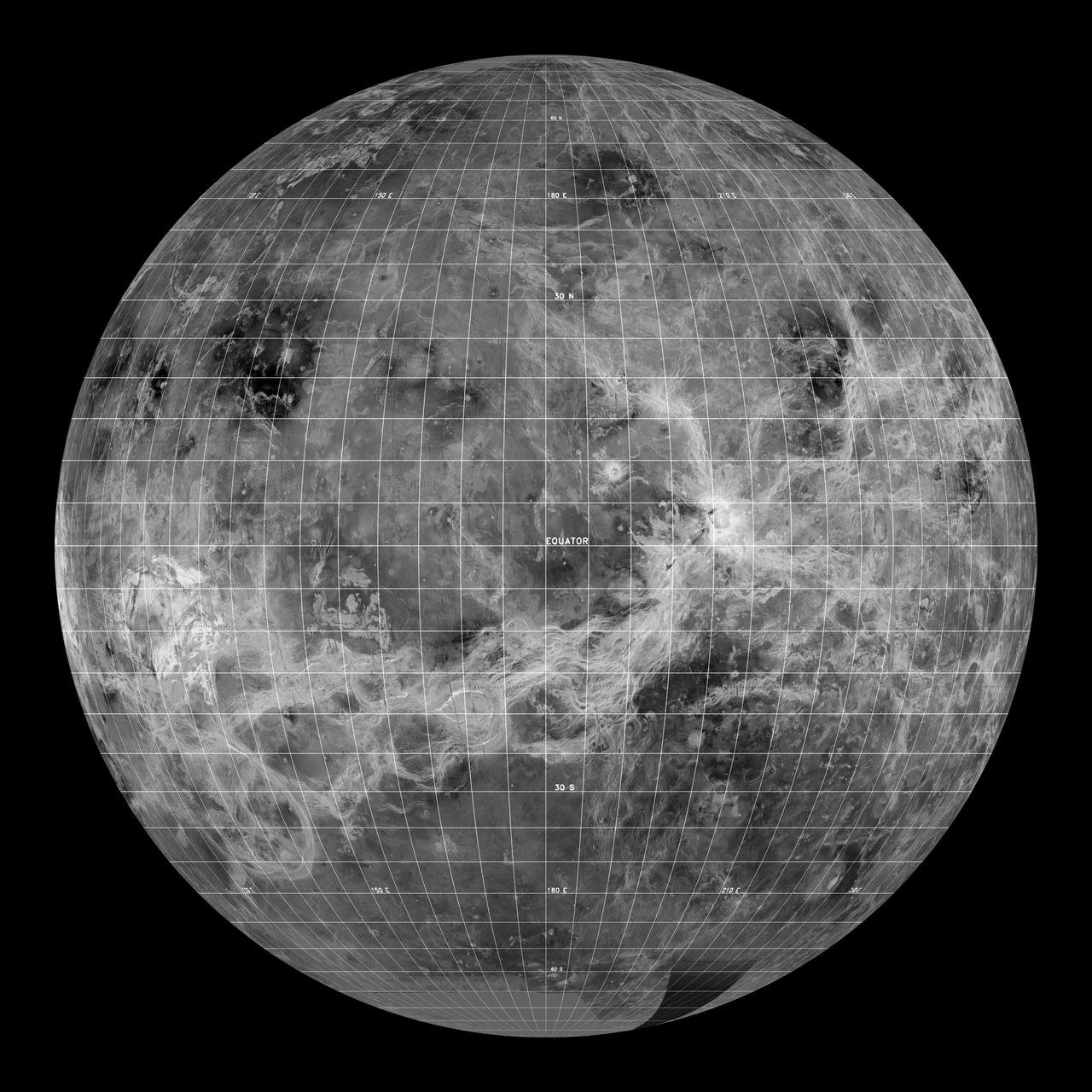
Venus
Evening Star
Earth’s twin
The Wanderers
The sky gives a problem
The Wanderers
The fixed stars keep their places relative to one another. These lights did not.
Mercury. Venus. Mars. Jupiter. Saturn. And, in the old geocentric sky, Sun and Moon. The Greeks called them planētai. Wanderers.
That shared human observation did not produce one shared mythology. A moving light could disappear into the Sun, return on another horizon, brighten, redden, slow, reverse its apparent direction, or keep a cycle long enough to count. The sky supplied recurring problems. Cultures supplied different offices.
The same Venus could become Inana, Ishtar, Aphrodite, Venus, Śukra, Great White, or something else entirely. Those names do not collapse into one another. They belong to different languages, cities, centuries, ritual worlds, texts, and ways of knowing.
Before we descend with Inana, we have to let her world remain her own.
The sky gives a problem. Culture gives an office.
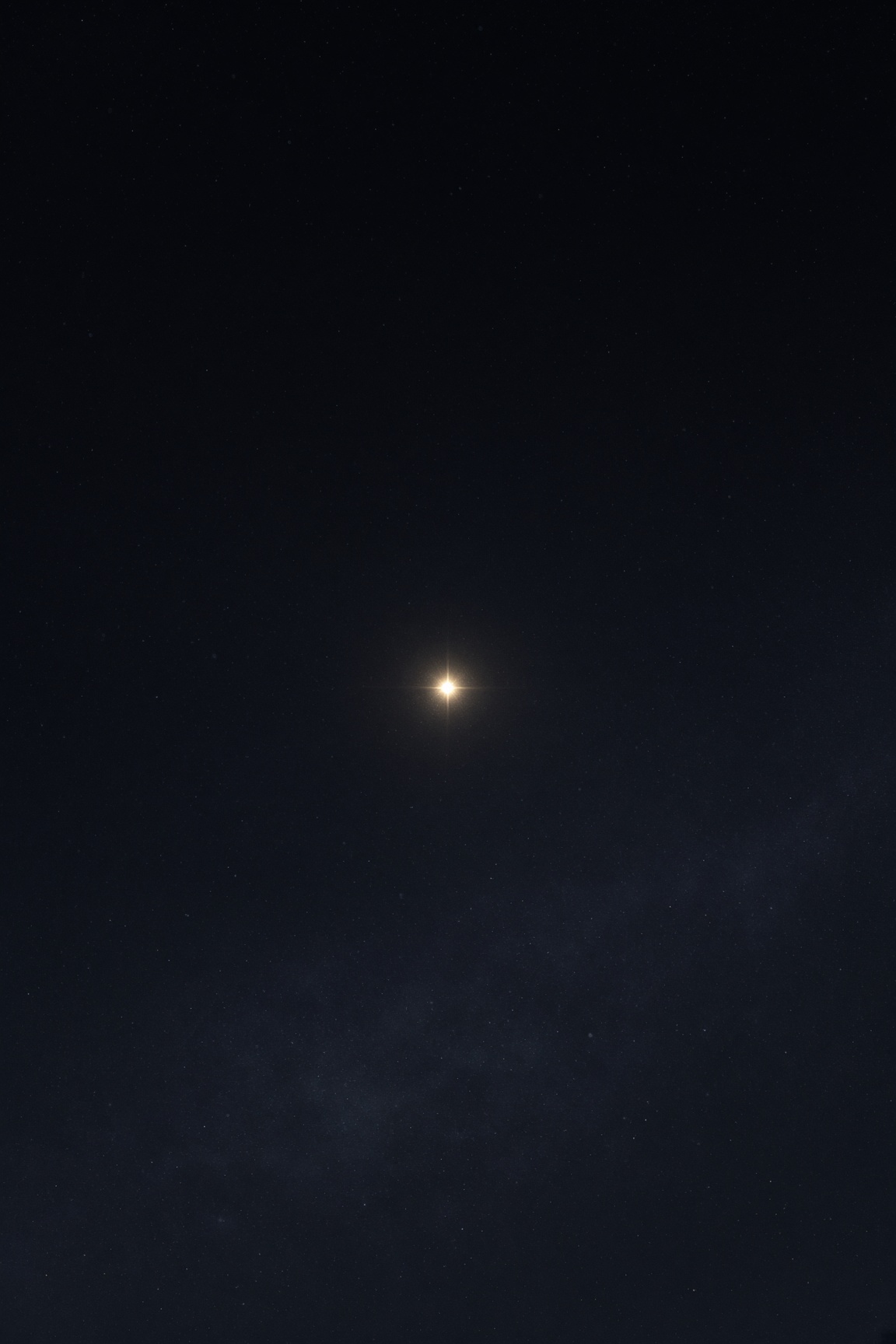
Open · Many skies, many offices
1 · Why wanderers attract stories
Return
Disappears into the Sun, comes back on the other shore.
Descent, exile, seasonal bargain, rising again.
Two faces
Morning and evening. Bright and faint. Fast and slow.
Twin names. Love and war. Male and female offices of one light.
Kingship
Slow, bright, high, hard to ignore.
Order, law, a city-god’s claim on the world.
Heat, drought, war
Red, near, irregular.
Plague, battle, the dangerous neighbor.
Crossing
Fast, always near the Sun, hard to catch.
Messenger, scribe, thief, guide of the dead.
Limit and time
Slowest of the seven. The edge of the old sky.
Harvest, old age, bound, the last hour.
Calendar
Recurs. Can be counted.
Omen science, week, festival, the king’s year.
2 · Same sky. Different offices.
Old Babylonian tradition, first-millennium copies. Diaries later still.
Mesopotamia
Begin with the light. It disappears into solar glare and comes back on the other horizon. Scribes in Babylon and Nineveh wrote those visibilities into Enūma Anu Enlil, a state omen series, and sent matching sentences to a king: harvest, market, war, the land. Dilbat is the wanderer’s ordinary tablet name. Ninsi’anna is an older theonym for the same light, sometimes female at sunset and male at sunrise in scholarly texts. Inana and Ishtar are goddesses with temples, hymns, and cities. Association is real. The omen tablet is not their hymn, and this house is not a survey of Marduk or Nergal. The Calendar room keeps the Venus tablet as an object.
Archaic poetry through the late Republic.
Greece and Rome
They did not discover the wanderers. They renamed a conversation. Phosphorus and Hesperus are two gates of one interior orbit. Aphrodite is a divine figure. Roman Venus is ancestry, victory, Lucretian generation. Latin lucifer is light-bringer before it is a devil. Reception is not the first office.
Epic, Purāṇic, and Jyotisha traditions.
India
Graha is not a synonym for planet. It is what seizes a portion of time. Navagraha holds Sun, Moon, five wanderers, and the lunar nodes Rahu and Ketu. Śukra is the bright one and a sage, guru of the asuras. Do not translate him as Aphrodite in Sanskrit.
Calendrical astronomy across dynasties.
China
Five phases, not seven gods of love and war. Venus is Tàibái, Great White, the metal star. Morning and evening kept as one wanderer. Later East Asian names still say gold star. Comparison after particularity.
Postclassic Yucatán. A thirteenth or fourteenth century book holding an older count.
Maya
The Dresden Codex schedules a 584-day Venus table in whole days. Morning-star risings in that manuscript carry martial imagery. Independent of Mesopotamia. Same planet. Not the same story.
Later planetary lists. Hellenistic identifications kept in their century.
Egypt
Morning Tioumoutiri and evening Ouaiti as later lists report them. The Dendera zodiac is a late Ptolemaic ceiling, not an Old Kingdom treatise. Hathor heard as Aphrodite is reception. Do not back-date that equation.
3 · What they could know
Brightness. Color. Which side of the Sun. How many days of invisibility. A cycle that almost closes. Five Venus meetings in nearly eight Earth years. Thirteen Venus years. A near-miss, not a perfect pentagram.
Sulfuric clouds. 464 °C. Magellan radar. A hydrogen envelope. Olympus Mons. Uranus. Neptune. The rings of Saturn as a telescope fact. Those arrive with instruments. Do not back-date them into a hymn.
4 · Four ways of reading a planet
Myth
What kind of presence is this in our world? A story, a cult, a surviving composition.
Omen science
What does this appearance mean for the king, the harvest, the city? A tablet of if-this-then-that.
Astronomy
Where is the body, and what is it made of? Measurement, model, instrument.
Mythopoesis
What does this still mean in a life that already has Magellan? Interpretation after the evidence. Never a substitute for it.
The wanderer is not its symbolism. The catalogue is not the night. The aperture does not create the planet. Jungian or archetypal reading is a lens on mythopoesis. It is never proof of what a planet physically causes.
Told · one story, one world
She descends →
Inana’s world remains her own. The next room tells the composition. It does not have to teach the rule again.