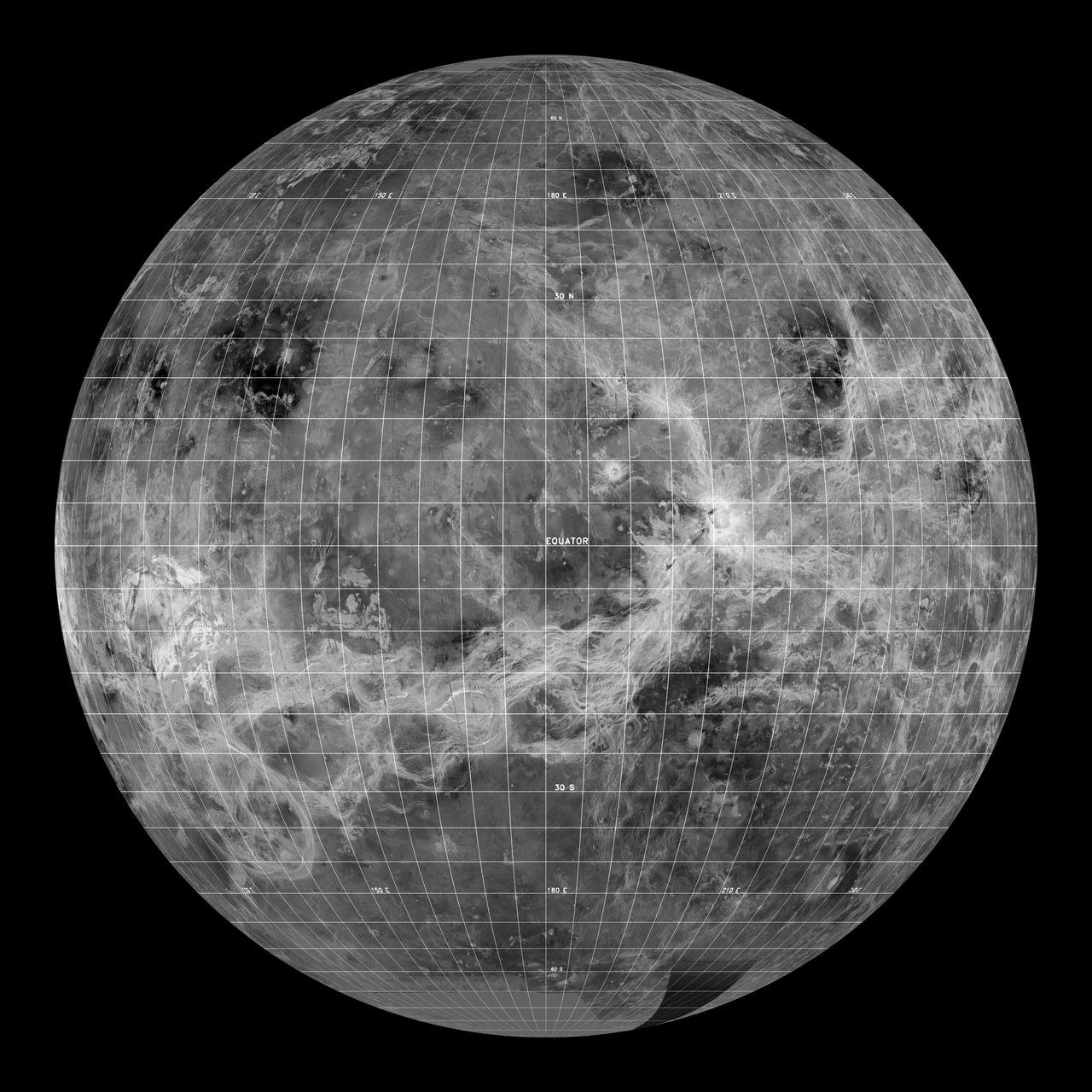
Venus
Evening Star
Earth’s twin
V· The Date
Measured · A clock walking through a date
The Date
A slowly drifting Venus clock moves through a fixed calendar date.
October 11 is not a dynamical target. The recurrence is walking through it.
Earth and Venus return to nearly, but not exactly, the same geometry every eight years. In this particular direct evening-star strand, Swiss Ephemeris shows Venus reaching a fixed early-Scorpio longitude about thirteen hours earlier every eight years. At roughly 1.24° per day, that is about 0.67° farther along the zodiac at the same UTC instant of October 11 with each return.
Two observables of the same imperfect Earth–Venus near-return. Stars keeps the familiar eight-year rose: five synodic periods of about 583.92 days leave a leftover of about 2.4 days against eight Earth years, so the petals never photocopy. This page measures a different consequence of that near-match: a geocentric fixed-longitude calendar drift of about thirteen hours. Related. Not the same residual. Sidereal period about 224.7 days. Synodic period about 583.92 days.
All mechanical diagrams use UTC. Local civil time appears only in the lived layer. The 2019 4°20′ crossing is 12 October UTC and 11 October in Austin. 2027 is 11 October in both. 2043 is 10 October in both.
The interval from 0° Scorpio to 4°20′ Scorpio in this chapter is about 83.5 hours. Venus is moving about 1.24° per day. Four degrees twenty minutes divided by that speed is three and a half days. The two tracks are the same walk, offset by a constant.
Swiss Ephemeris · geocentric tropical · UTC
~13 h
Earlier every eight years. About 0.67° farther on the eleventh.
The evening chapter
Two tracks through October
At 00:00 UTC on 11 October, Venus in this strand advances about 0.67° every eight years: late Libra in the 1950s, across 0° Scorpio in the 1970s, through 4°20′ Scorpio in the 2030s, and past it by 2043 (4°51′).
- 195513 Oct 00:38 UTC · 0°16 Oct 12:02 UTC · 4°20′11 Oct 00:00 · 27°28′ Libra · still Libra
- 196312 Oct 11:49 UTC · 0°15 Oct 23:15 UTC · 4°20′11 Oct 00:00 · 28°08′ Libra · still Libra
- 197111 Oct 22:43 UTC · 0°15 Oct 10:10 UTC · 4°20′11 Oct 00:00 · 28°49′ Libra · ingress later that UTC date
- 197911 Oct 09:47 UTC · 0°14 Oct 21:18 UTC · 4°20′11 Oct 00:00 · 29°29′ Libra · ingress later that UTC date
- 198710 Oct 20:48 UTC · 0°14 Oct 08:20 UTC · 4°20′11 Oct 00:00 · 0°10′ Scorpio · between 0° and 4°20′
- 199510 Oct 07:48 UTC · 0°13 Oct 19:22 UTC · 4°20′11 Oct 00:00 · 0°50′ Scorpio · between 0° and 4°20′
- 20039 Oct 18:56 UTC · 0°13 Oct 06:32 UTC · 4°20′11 Oct 00:00 · 1°30′ Scorpio · between 0° and 4°20′
- 20119 Oct 05:49 UTC · 0°12 Oct 17:28 UTC · 4°20′11 Oct 00:00 · 2°11′ Scorpio · between 0° and 4°20′
- 20198 Oct 17:05 UTC · 0°12 Oct 04:46 UTC · 4°20′11 Oct 00:00 · 2°51′ Scorpio · between 0° and 4°20′
- 20278 Oct 03:59 UTC · 0°11 Oct 15:41 UTC · 4°20′11 Oct 00:00 · 3°31′ Scorpio · between 0° and 4°20′
- 20357 Oct 15:12 UTC · 0°11 Oct 02:56 UTC · 4°20′11 Oct 00:00 · 4°11′ Scorpio · between 0° and 4°20′
- 20437 Oct 02:17 UTC · 0°10 Oct 14:03 UTC · 4°20′11 Oct 00:00 · 4°51′ Scorpio · past 4°20′
One family · two chapters
Inferior year, then evening return
After an October inferior, Venus is morning, then superior around August, then evening. About 350 days after the inferior she crosses early Scorpio direct, elongation about 15° east. That is the same synodic cycle, later chapter. Not a second clock.
1954 → 1955
15 Nov 1954 · 22°24′ Scorpio
Next evening: 0° Scorpio 13 Oct. 4°20′ 16 Oct.
Rx loop still high in Scorpio. 4°20′ is not yet inside it.
1962 → 1963
12 Nov 1962 · 19°58′ Scorpio
Next evening: 0° Scorpio 12 Oct. 4°20′ 15 Oct.
Same family. Inferior still well above 4°20′.
1970 → 1971
10 Nov 1970 · 17°33′ Scorpio
Next evening: 0° Scorpio 11 Oct 22:43 UTC. 4°20′ 15 Oct.
Following-year ingress falls on 11 October. 4°20′ is still four days later.
1978 → 1979
7 Nov 1978 21:34 UTC · 15°07.5′ Scorpio
Next evening: 0° Scorpio 11 Oct 09:47 UTC. 4°20′ 14 Oct 21:18 UTC.
Birth-year inferior. Direct station of that loop is 7°20′ Scorpio. 4°20′ is not inside the 1978 Rx path. First birthday meets the ingress, not the Ascendant degree.
2010 → 2011
29 Oct 2010 · 5°30′ Scorpio
Next evening: 0° Scorpio 9 Oct. 4°20′ 12 Oct 17:28 UTC · Austin 12:28 CDT 12 Oct.
Rx loop now covers 4°20′. Triple in the Rx year. Direct evening return the next October.
2018 → 2019
26 Oct 2018 14:16 UTC · 3°06.5′ Scorpio
Next evening: 0° Scorpio 8 Oct. 4°20′ 12 Oct 04:46 UTC · Austin 23:46 CDT 11 Oct.
Triple of 4°20′ in 2018. Direct evening 4°20′ on 11 October local, 2019.
2026 → 2027
24 Oct 2026 03:44 UTC · 0°45′ Scorpio
Next evening: 0° Scorpio 8 Oct. 4°20′ 11 Oct 15:41 UTC · Austin 10:41 CDT 11 Oct.
Last Scorpio inferior of this century arm. Last triple of 4°20′. Direct evening 4°20′ on the birthday, daytime Austin.
2042 → 2043
19 Oct 2042 06:29 UTC · 26°00′ Libra
Next evening: 0° Scorpio 7 Oct 02:17 UTC. 4°20′ 10 Oct 14:03 UTC.
The inferior has left Scorpio. The evening walk has not. 4°20′ falls on 10 October UTC, past the eleventh. The clock does not stop at the natal degree.
The century arm
The same near-commensurability, measured another way
Conjunctions of this October family walk backward about 2.4° every eight years. That is why 1926 sits at 28° Scorpio and 2026 sits at 0°45′. Five synodic periods are about 2.4 days short of eight Earth years. That leftover is the rose Stars already keeps. The thirteen-hour calendar drift on this page is a different observable of the same imperfect Earth–Venus return. Related. Not the same residual.
Lived · natal contact
Why 4°20′ is a second rail here
4°20′ is the Ascendant. It is why the second track matters here. It is not why the track exists.
11 October 1978 · 08:58 London · 07:58 UTC. Sun 17°39.2′ Libra. Ascendant 4°20′ Scorpio. Venus 21°55.5′ Scorpio, direct, evening, seven days before station retrograde.
October 11 was not discovered blind. It was selected because it is the birth date. The test is therefore not whether October 11 appears, but whether one coherent Venus mechanism explains the entire sequence before and after the personally salient intersections.
2011
12:28 CDT, 12 October
2011-10-12 17:28 UTC · elong +15.29° E · Sun vs natal Sun +1.39°
2019
23:46 CDT, 11 October
2019-10-12 04:46 UTC · elong +15.77° E · Sun vs natal Sun +0.91°
2027
10:41 CDT, 11 October
2027-10-11 15:41 UTC · elong +16.23° E · Sun vs natal Sun +0.45°
Among 2011, 2019, and 2027, 2027 is the daytime 11 October Austin return. 2035 is one arcminute from 4°20′ at 00:00 UTC on the eleventh, on 10 October local. 2043 is already 4°51′ at that instant: 10 October 14:03 UTC, 09:03 CDT. Civil birthday and solar return are not the same test. The clock does not stop because a natal degree has been reached.
Inspect · Personal chronology · already established
1971
Year Elon Musk was born. Year-level juxtaposition. Not a transit to his chart.
1978
Birth, 11 October. Venus 21°55.5′ Scorpio. Inferior 7 November at 15°07.5′ Scorpio.
1979
First birthday. Venus enters Scorpio 11 October 09:47 UTC.
2018
Age 40. Marital rupture. Psalm 42 watershed, independently recorded before this pattern was mapped.
2019
Venus 4°20′ Scorpio at 23:46 CDT, 11 October Austin.
2026
Final Scorpio inferior of this arm. Final triple of the Ascendant.
2027
Venus 4°20′ Scorpio at 10:41 CDT, 11 October Austin.
Psyche follows another clock. Its 1978 0°00′42″ result is independently verified and appears here only because the dates intersect. It does not explain the Venus walk.
Eros follows another clock. The 6 September 2026 Mars–Uranus crossing belongs to the archive, not to this mechanism.
Inspect · What fails
- October 11 is not a dynamical target of Venus.
- The observed shift of this track is about thirteen hours per eight years, not the 0.8-day difference of thirteen Venus tropical orbits versus eight Earth years.
- The 2011 / 2019 / 2027 direct strand is not a second oscillator. It is the following-year evening chapter of the same synodic family as 2010 / 2018 / 2026.
- 1978 retrograde does not triple 4°20′. That loop stations direct at 7°20′ Scorpio.
- Venus, Psyche, the Moon, and Eros are not one clock.
- The 1926 / May 2023 / July 2023 28° longitudes are a diachronic fixed-sign geometry, not a simultaneous T-square and not this arm alone.
- 2027 square Pluto and 2019 opposite Uranus are different outer-planet weather. Venus is the repeating needle.
- A 1952 Psyche Sagittarius ingress on 11 October does not survive JPL.
- The walk does not terminate at 4°20′. 2043 is already past it.
The point returns. The constellation changes. The date stays. The degree walks.
They kept looking. The next rooms are particular names, not another residual.