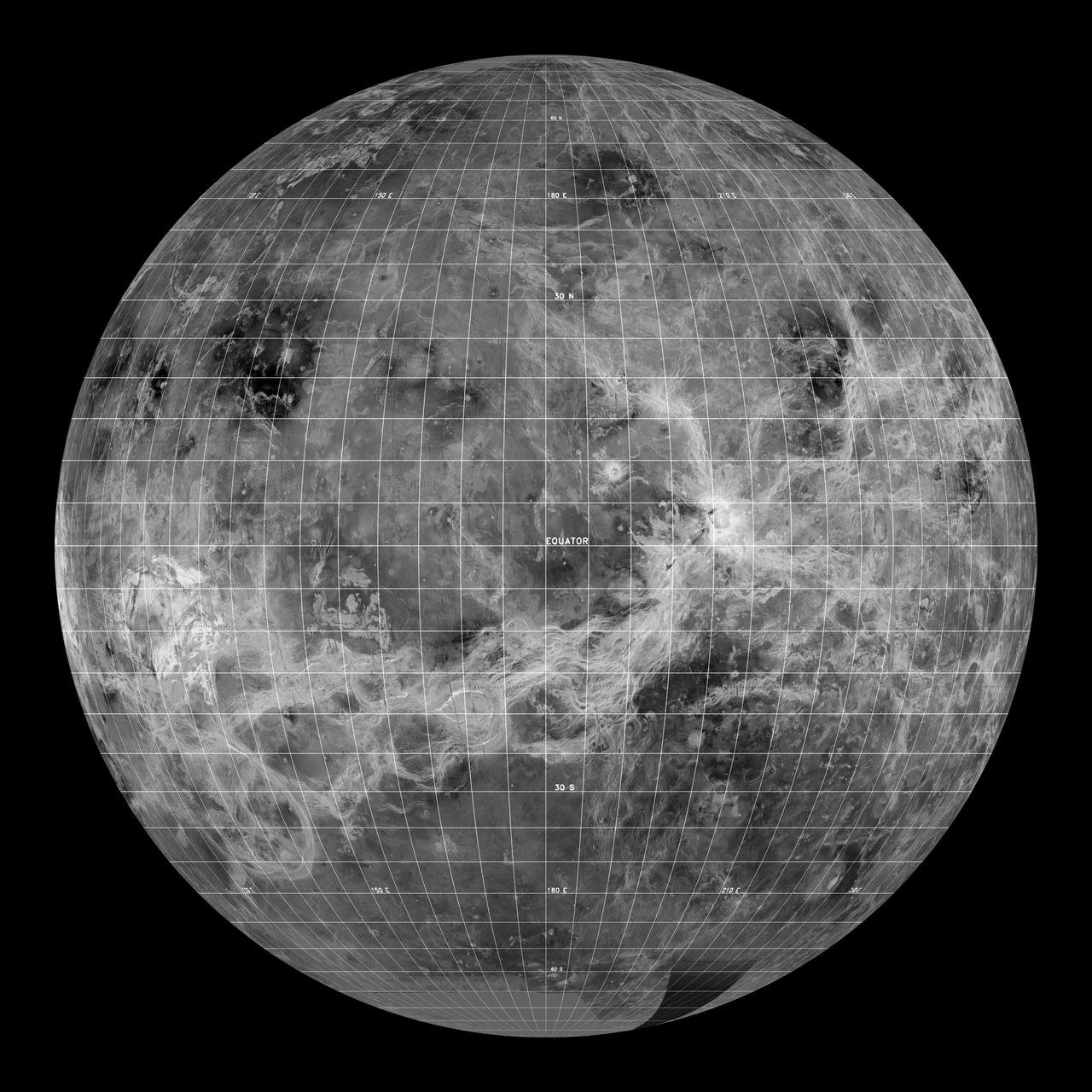
Venus
Evening Star
Earth’s twin
VII · She Descends
ETCSL 1.4.1
Inana’s descent to the nether world
Southern Mesopotamia. A Sumerian-language literary world of cities, temples, and scribal houses. The poem is not a map of the nether world.
The composition belongs to Sumerian literature. Most tablets that survive are Old Babylonian copies, about 1900 to 1600 BCE, centuries after the first telling. The English used here is Oxford’s ETCSL 1.4.1 (2001).
Inana leaves the E-ana, her temple at Uruk, and sets her mind on the great below. This is a Sumerian literary world of cities, temples, and scribal houses. The poem is not the planet speaking.
Inana sets her mind on the nether world.
She dresses in the seven me, the offices of her power, and instructs her minister Ninšubur what to do if she does not return.
At each of seven gates she is stripped of one office.
Naked, she is killed and hung on a hook.
Ninšubur raises the alarm. Enki fashions the galatura and the kurgarra, who recover her.
She may leave only if a substitute is found. Dumuzi is taken. Geštinanna shares the time below.
The story gives us a descent. The sky gives us disappearance into solar glare and return as the other light. The surviving composition does not name Dilbat or Ninsi’anna. Whether one became the language of the other is a historical question, not an automatic truth.
Inspect · Place beside
Told · after one story
Why desire was put hereNeighbor · The Hero’s Journey
What happens to us between leaving and returning?
Inspect · Astral readings and their disputes
Do not equate the literary seven gates with the synodic cycle as if the poem were an orrery. Jeffrey Cooley and others have argued that some Inana narratives track Venus’s motions. That is scholarship. It is not what ETCSL 1.4.1 says. Other readers treat the composition as a political-theological narrative of power and death. This office lets the story stand, then places the astronomical rhyme beside it without collapsing them.
Oxford composite: 412 lines from more than fifty cuneiform sources (2001).