Venus

Evening Star

Earth’s twin

Evening starE 40.5°

I · The Light

What are we actually seeing?

At first, Venus seems to give us almost nothing but light.

Same world · different light

The first Venus is an apparition. Change the instrument, and the apparition becomes weather, then heat, then ground.
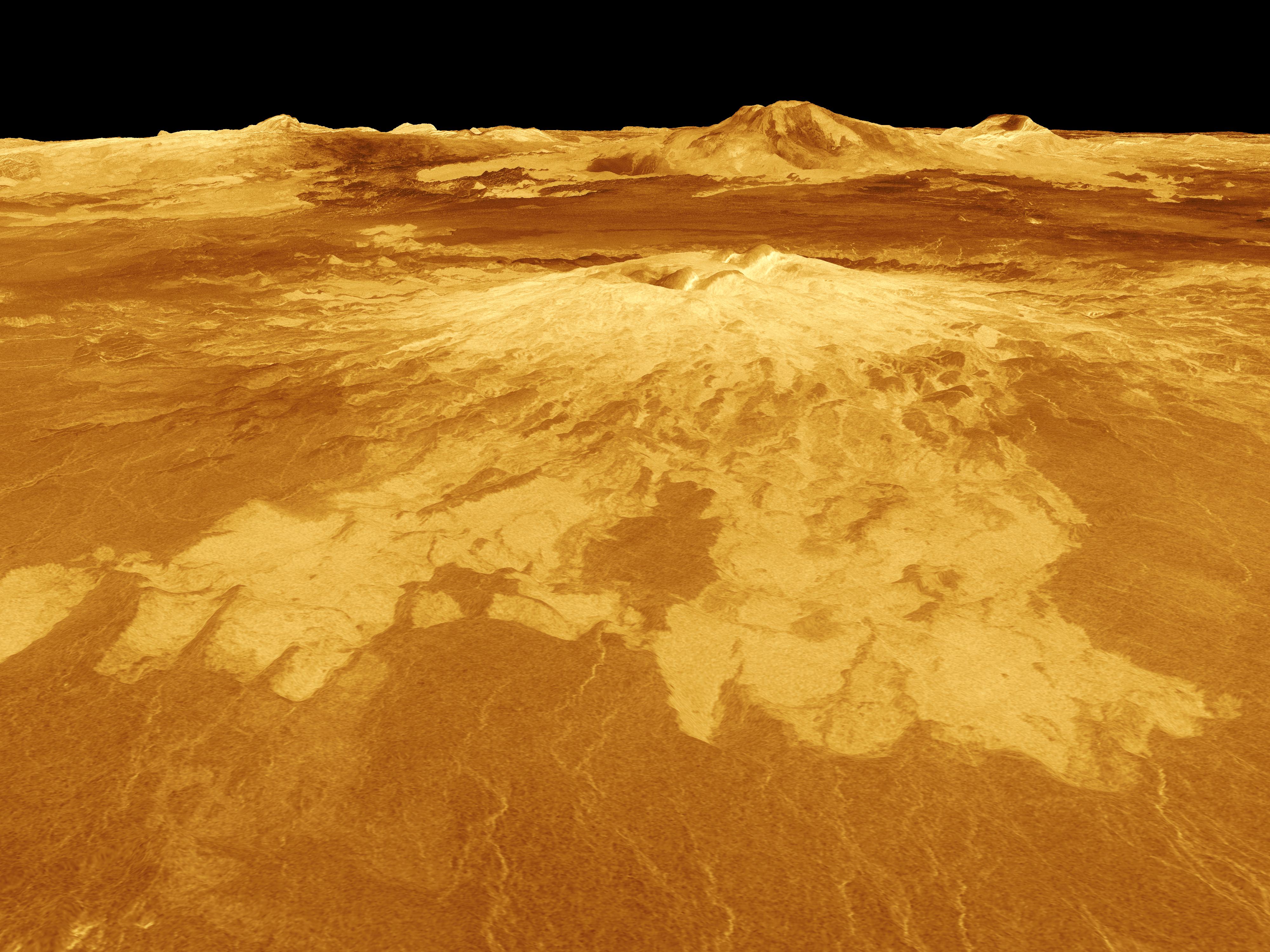
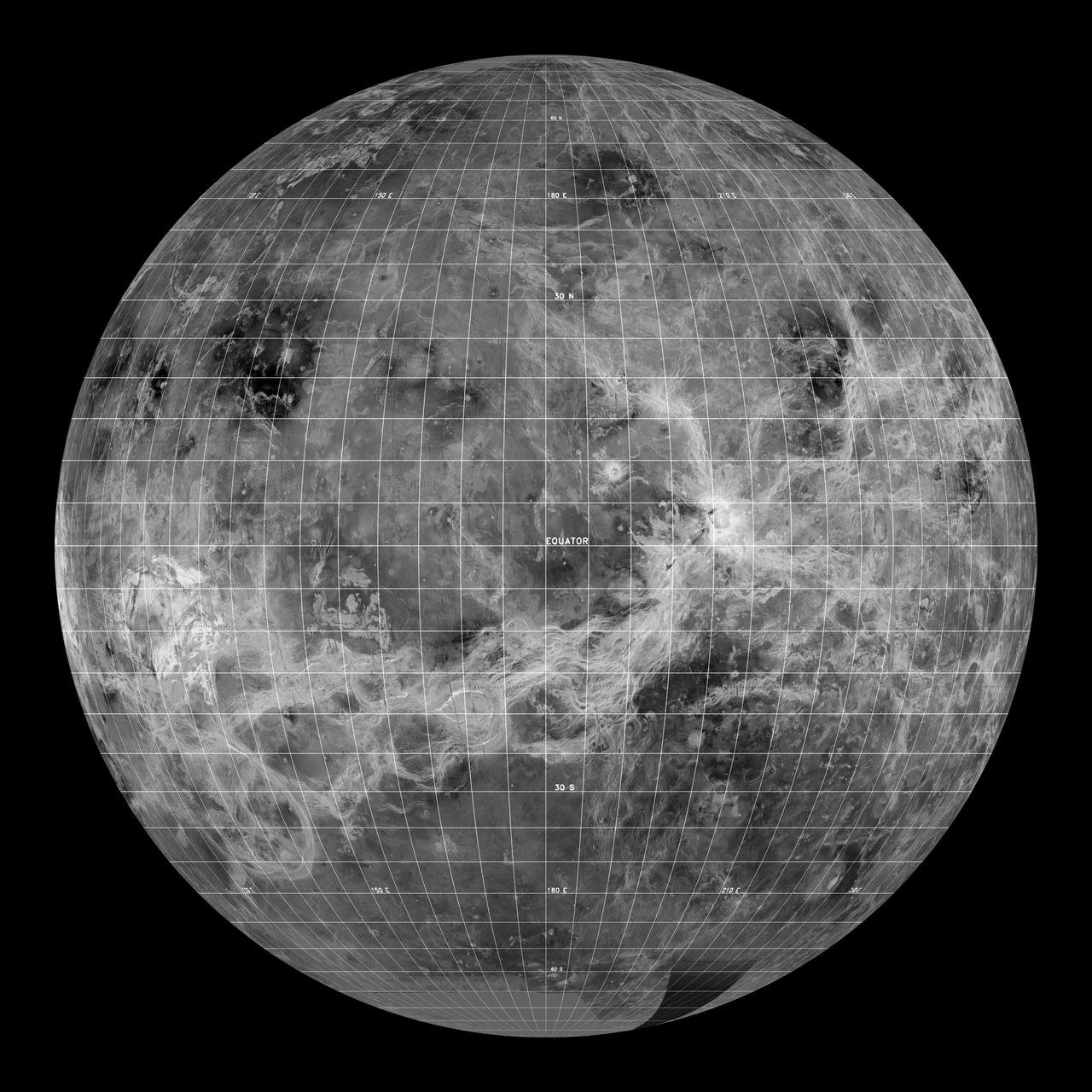
Documentary. Visible. Galileo / NASA, 1990. PIA00107.

Documentary · Visible

A crescent of cloud. Almost nothing but light. Sulfuric deck, nearly featureless to the unaided and ordinary camera. The first Venus is an apparition.

Galileo / NASA, 1990. PIA00107.

What this can show
Phase, brightness, the lid.
What this cannot
The ground. Weather inside the deck. A name for what the clouds hide.
Before instruments, there is a light. Third brightest after the Sun and the Moon. It hangs near morning or evening, brighter than any star that keeps its place. What the eye meets is not fire. It is sunlight thrown back by a lid of sulfuric cloud.

Venus never strays more than about forty-seven degrees from the Sun. That is why she is only a morning star or an evening star. The orbit is interior to ours. Greatest elongation is a geometry of looking, not a personality.

Brightest is not always closest. Closest is inferior conjunction: a new world, large in angle, lost in glare. Greatest brilliancy is a thick crescent, after she has begun to leave, or before she fully returns.

Phases · morning / evening

Evening star

Look west after sunset. She is the brightest thing that is not the Moon.

Lit
28%
Apparent size
38″
From the Sun
40.5°
Brightness
−4.9

One synodic cycle is how long until Venus, Earth, and the Sun stand in the same arrangement again: about 584 days. Brightest is not always closest. Closest is when she passes between us and the Sun, a large disk lost in glare: inferior conjunction. Greatest brilliancy is a thick crescent, after she has begun to leave, or before she fully returns.

Inspect · Five registers

Five registers

  • Measured

    What instruments establish about the physical planet.

  • Recorded

    What tablets, telescopes, spacecraft and archives preserve.

  • Told

    What particular myths, poems and traditions say.

  • Lived

    What happened in one dated human life.

  • Mythopoesis

    What this observatory creates symbolically from the material.

Inspect · Brightness, phase, and the 1610 evidence

Apparent magnitude can reach about −4.6 at greatest brilliancy. Bond albedo is near 0.77. In late 1610 and into 1611, Galileo, working from Padua and then Florence, turned a new telescope on the disk. He saw phases like the Moon’s, and a disk that grew as it became a crescent. Those drawings are among the early telescopic arguments that Venus goes around the Sun, not around us as a never-waning lamp. They were not in Sidereus Nuncius that March. Conjunction, elongation, and brilliancy are three different clocks. Do not collapse them.