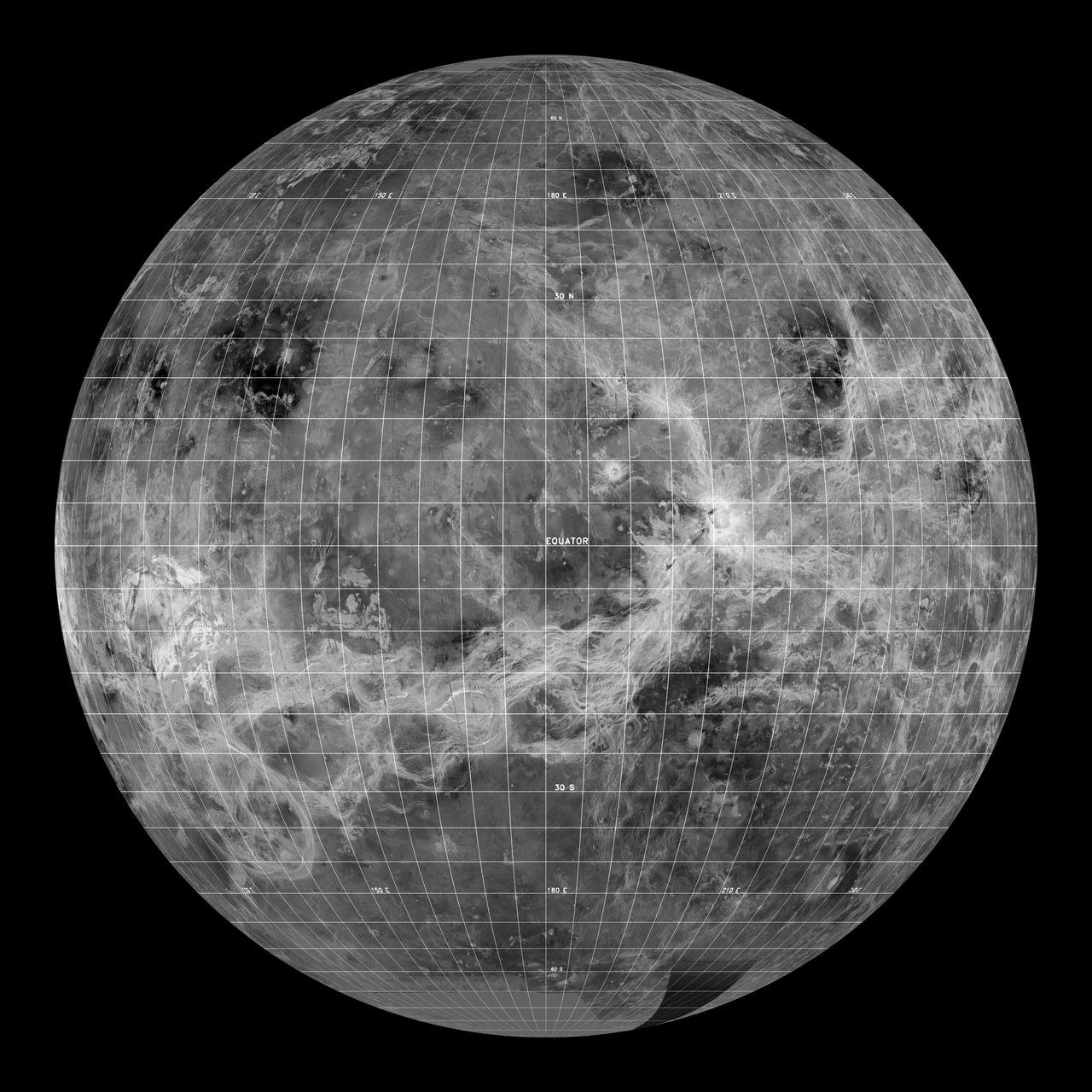
Venus
Evening Star
Earth’s twin
V · The Clock
Five returns. Two shores.
The Venus clock
The beauty is the near-miss.
Venus, Earth, and the Sun return to the same arrangement about every 583.92 d. That interval is the synodic cycle. Five of those meetings fall in nearly eight Earth years, thirteen Venus years. Plot the meetings and a fivefold figure appears, then slowly fails to close. The drift is about 2.45 days per eight-year stack.
5 · 8 · 13
Meetings · Earth years · Venus years
Synodic cycle
583.92 d
Venus, Earth, and the Sun. One meeting.
Drift
2.45 d
Per eight-year stack. The figure fails to close.
Last transit
5 to 6 June 2012
Next: 10 to 11 December 2117. Recurrence was measured before it was symbolized.
Earth’s longitude at inferior conjunction
Five returns
2919.6 d
Eight Earth years
2922.05 d
The leftover
2.45 d
When does repetition become a pattern? When a later observer decides the near-rhyme is worth keeping. The geometry is measured. The meaning is human.
Recorded · Mesopotamia · the state sky
They did not only watch whether she returned
The clock above is physics. Before Magellan, before Galileo, a kingdom treated that same disappearance and return as a sign that could be copied, compared, and sent to a king.
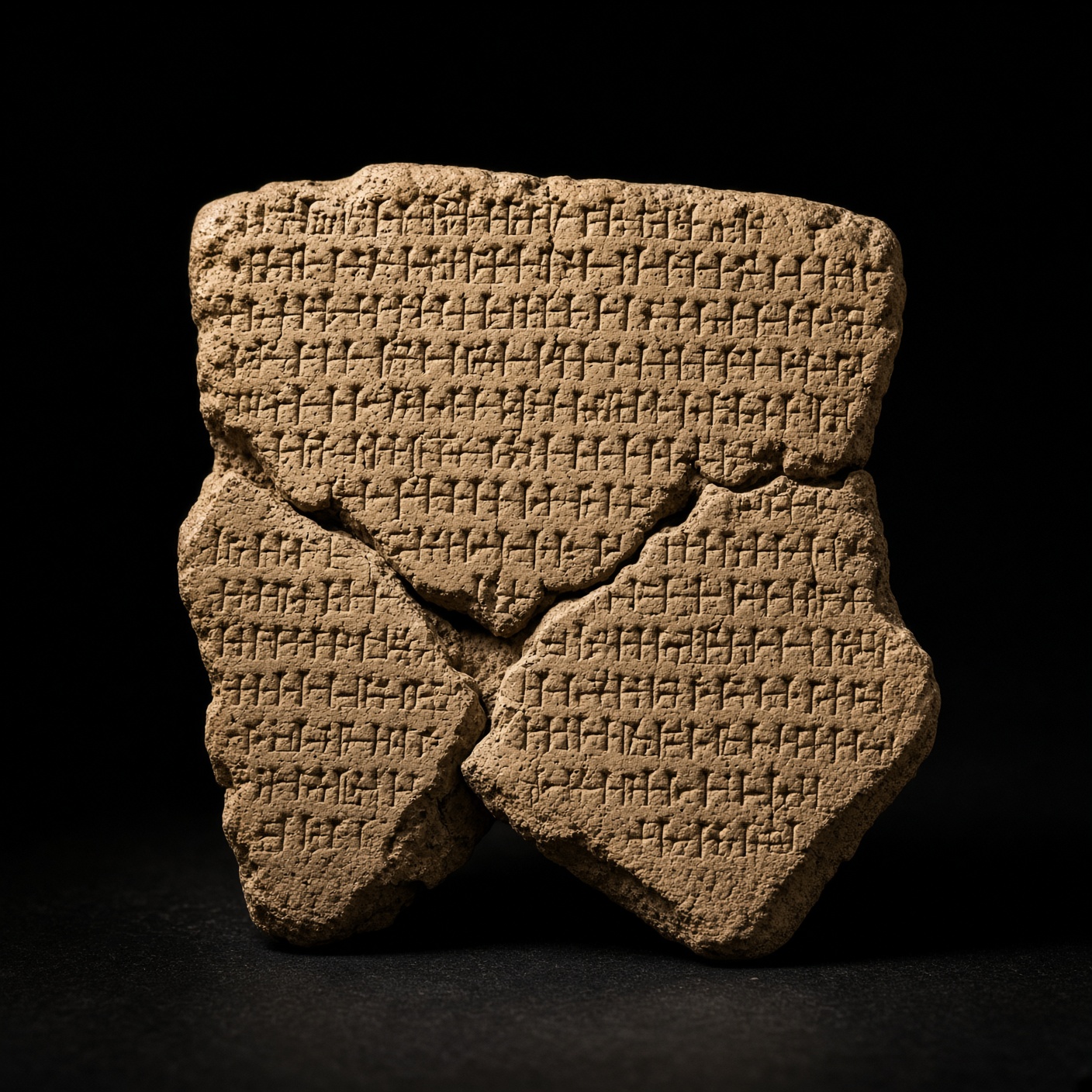
Enūma Anu Enlil 63
K.160
Venus Tablet of Ammi-saduqa
British Museum K.160 · Nineveh (Kuyunjik) · Neo-Assyrian copy · 17.14 × 9.20 × 2.22 cm
Akkadian, cuneiform
Interpretation of a broken tablet. Not the British Museum object.
Nineveh, modern Kuyunjik. The clay we can hold is Neo-Assyrian, from Ashurbanipal’s library. Incomplete: three joined pieces. Beginning of the obverse and end of the reverse are wanting. Reiner and Pingree’s source C among several witnesses, not the only copy.
The baked object is first-millennium. An older observation tradition is associated with Ammi-saduqa, fourth successor of Hammurabi, because the series names a year as the Year of the Golden Throne, the year-name of his eighth year. If the Middle Chronology is used, that reign falls around 1646 to 1626 BCE. High, Middle, and Low sit about sixty years apart because Venus’s eight-year return aliases the dates. The argument is live. This house does not settle it. Astronomical diaries from Babylon, from the seventh century BCE onward, are a different practice: nightly observation written down, not this omen series.
Enūma Anu Enlil, When Anu and Enlil, is a series of about seventy tablets of celestial and weather omens, some six or seven thousand sentences. It is not natal astrology. It is if-this-then-that for king, land, harvest, market, and war. Scholars, ummânu, watched the sky, excerpted the matching omen, and wrote to the Neo-Assyrian court. More than five hundred such reports survive, collected now as State Archives of Assyria 8. A scholar did not invent a personality for the light. He matched an appearance to a sentence already written. To live in that state was to live where the sky could become an archive of signs.
Venus’s job on this tablet is appearance: first light after glare, last light before glare, how many days of dark, which horizon of return. Morning and evening are two visibilities of one light here, not two goddesses. The wanderer is named Ninsi’anna, an older theonym kept from Old Babylonian sources. Dilbat is the ordinary first-millennium tablet-word on other texts. Inana and Ishtar are goddesses with temples and stories. Association is attested. Identity is not automatic. This tablet is not their hymn.
Heliacal risings and settings of Ninsi’anna as lunar dates across a run of twenty-one years. Each entry tends to name a month and day of disappearance, the days of absence, the month and day of return on the other horizon, then an omen sentence about harvest, king, or land. Copies, not the Old Babylonian original. Some later sections are more schematic than observational. Horizon refraction and copy error sit in the numbers. It is not a telescope log.
EAE 63 · year 1 · Reiner and Pingree, BPO I, 1975
Month XI, day 15. She disappears in the west. Three days of dark. Day 18 she is visible in the east.
Springs will open. Adad will bring his rain, Ea his floods. A king will send messages of reconciliation to a king.
EAE 63 · Reiner and Pingree, BPO I, 1975
Month VIII, day 11. She disappears in the east. Two months and seven days of dark. Month X, day 19 she is visible in the west.
The harvest of the land will prosper.
Inspect · Edition and a caution
Reiner and Pingree, Babylonian Planetary Omens I, 1975. Rawlinson III 63. Virolleaud, ACh Ishtar 12–14.
Do not quote EAE 59 colour-omens as if they were this tablet. Those belong to other Venus omen tablets in the same series. This object is visibilities plus apodoses. They do not describe sulfuric clouds. They do not make Inana’s descent. Wikipedia’s date of about 1650 BCE is the inferred Old Babylonian tradition, not the date of the clay.
The same problem of return was counted, independently, in a Maya book. Not a Mesopotamian table under another name.
Recorded · Dresden Codex
Dresden Codex · Venus table
The table schedules a planet. It does not issue private prophecy.
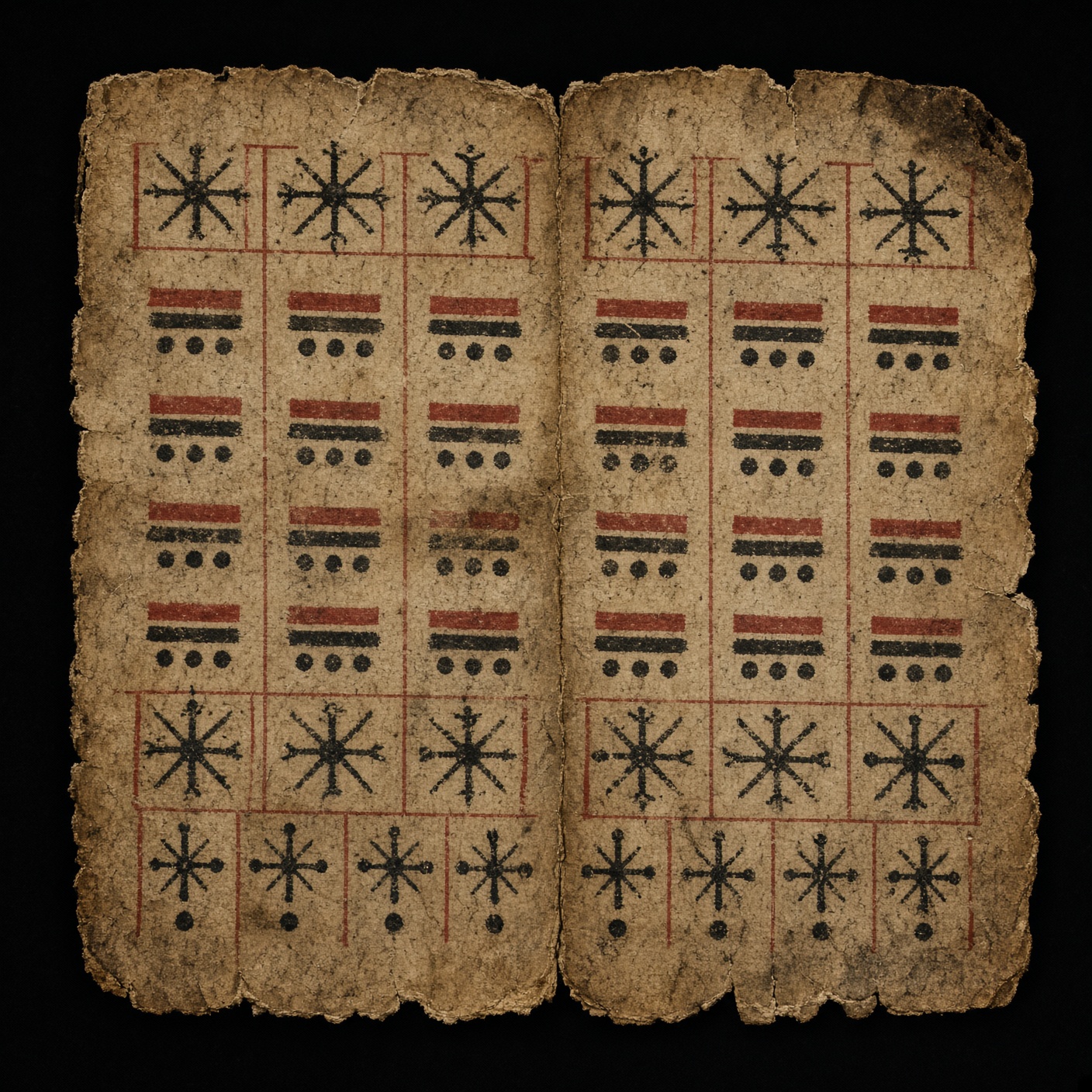
A Maya bark-paper book from the northern Yucatán, now in the Saxon State Library, Dresden. A Postclassic painted manuscript, most often dated to the thirteenth or fourteenth century. The Venus count it holds is older than the surviving copy. Scribal astronomy and omen in Yucatec Maya. Not a telescope log, and not a Mesopotamian table under another name.
584 d
Four whole-day legs · mean 583.92 d
Pages 24, 46 to 50
236
Morning star
East of the Sun before sunrise. The table’s first face.
90
Superior dark
Far side of the Sun. Long glare, not death of the planet.
250
Evening star
West of the Sun after sunset. Same body, second face.
8
Inferior dark
Between Earth and Sun. The short disappearance.
Neighbor · how a day is named
Two gears
Thirteen numbers. Twenty names. They only realign after 260 days.
260
13 × 20
Two gears · one click per dawn
Dresden writes Tzolk’in dates down the columns so a heliacal rise can be named as a day, not only as a number. 1 Ajaw, then the next 1 Ajaw 584 days later. This 260 is 13 × 20. It is not the remainder of two civil dates. Neighbor. Not identity.
Measured · Diagram
Two stations · two shores
Morning star
1978
28°36′ W
Station direct
Venus · 7°20′ Scorpio
Evening star
2023
28°36′ E
Station retrograde
Venus · 28°36′ Leo
28°36′ · two stations
Same elongation · opposite lamp · two clocks on the evening
Inspect · From Earth, from the Sun, along the path
Inspect · Direct, retrograde, direct
Direct
Evening
East of the Sun after sunset. Apparent motion still eastward.
Station retrograde · 2023
Evening · ~28–30° E
Apparent motion stops. She has begun to turn back toward the Sun.
Retrograde
Toward the Sun
Apparent geocentric reversal. The heliocentric orbit did not turn around.
Inferior conjunction
Between Earth and Sun
The short dark. Morning and evening are the same world on opposite sides of this gate.
Station direct · 1978
Morning · ~28–30° W
Apparent motion stops again, then resumes eastward.
Direct
Morning
West of the Sun before sunrise. The other light. The same body.
Stations happen when an interior planet’s apparent geocentric longitude stops and reverses, as Venus catches up and passes between Earth and the Sun. The planet does not turn around on its orbit. The sky-path does.
Morning star and evening star are the same world on opposite sides of inferior conjunction. Direct, then retrograde, then direct again. Dresden’s eight-day inferior dark sits between these two gates.
A mirrored elongation is partly the geometry of an inferior planet. The ~28–30° station elongations have an astronomical reason. They are not a private symmetry.
Two measurements · one station
- Zodiacal longitude
- 28°36′ Leo
- Elongation
- 28°36′ E of the Sun
These are different quantities. One is a place in the signs. One is a distance from the Sun. The equality is not built into the definition of a Venus station. It happens here because the Sun was nearly at 0° Leo.
Two clocks · one instant
- UTC
- 23 July 2023 · ~01:33 UTC
- Austin
- 22 July 2023 · ~20:33 CDT · Austin
Stars files the UTC civil date. Popular tropical almanacs often print 22 July. This office keeps both clocks. They are one instant in two time zones, not two mystical hours.
Lived · after the astronomy
One modern instance of attention
The personal archive offers two dated stations on those opposite shores: morning, 1978; evening, 2023. That does not make a life a reenactment of Venus mythology. It is one human record of looking at a world humans have divided, named, and mistaken for millennia.
A later discovery is not an earlier intention. A meaningful rhyme is not a cause.
Natal year · not infant consciousness
28 November 1978
Natal year. Birth is 11 October 1978, London. The station is not an infant watching.
The days that followed
23 July, then 24 and 25
The 2023 evening station sits immediately before the July 24 and 25 chronology already kept in The Year. She lived those days first. She found this sky later.
Inspect · Receipts · the annual cycle
1978
Venus cycle · 19782023
Venus cycle · 202323 July 2023 · ~01:33 UTC
Public sky at the evening station
Inspect · What this figure is not
1978 and 2023 are two dated instances of the two station offices. They are not consecutive gates of a single synodic loop. Inferior-conjunction stations of one cycle sit weeks apart, not forty-five years.
1978 Venus station · 7°20′ Scorpio beside 2023 Mars · 7°42′ Virgo is A near-sextile, about 22′ from exact. Secondary correspondence. Not the governing claim. The stations themselves are the object.
Scribe-supplied station figures, tropical geocentric, popular-ephemeris class. Cafe Astrology prints Rx 22 July 2023 28°36′ Leo, direct 3 September 2023 12°12′ Leo. Independent Swiss-Ephemeris arcsecond confirmation remains the proper next measurement. Keplerian estimates in this office are not that confirmation.
The same eight-year near-miss that fails to close the pentagram also walks a fixed calendar date.