Venus
Evening Star
Earth’s twin
XV · Ahead
The clock is still running
Venus ahead
The planet is not a closed case.
After Magellan, American planning went quiet for a generation. That is over. Dates are as the agencies published them. They move.
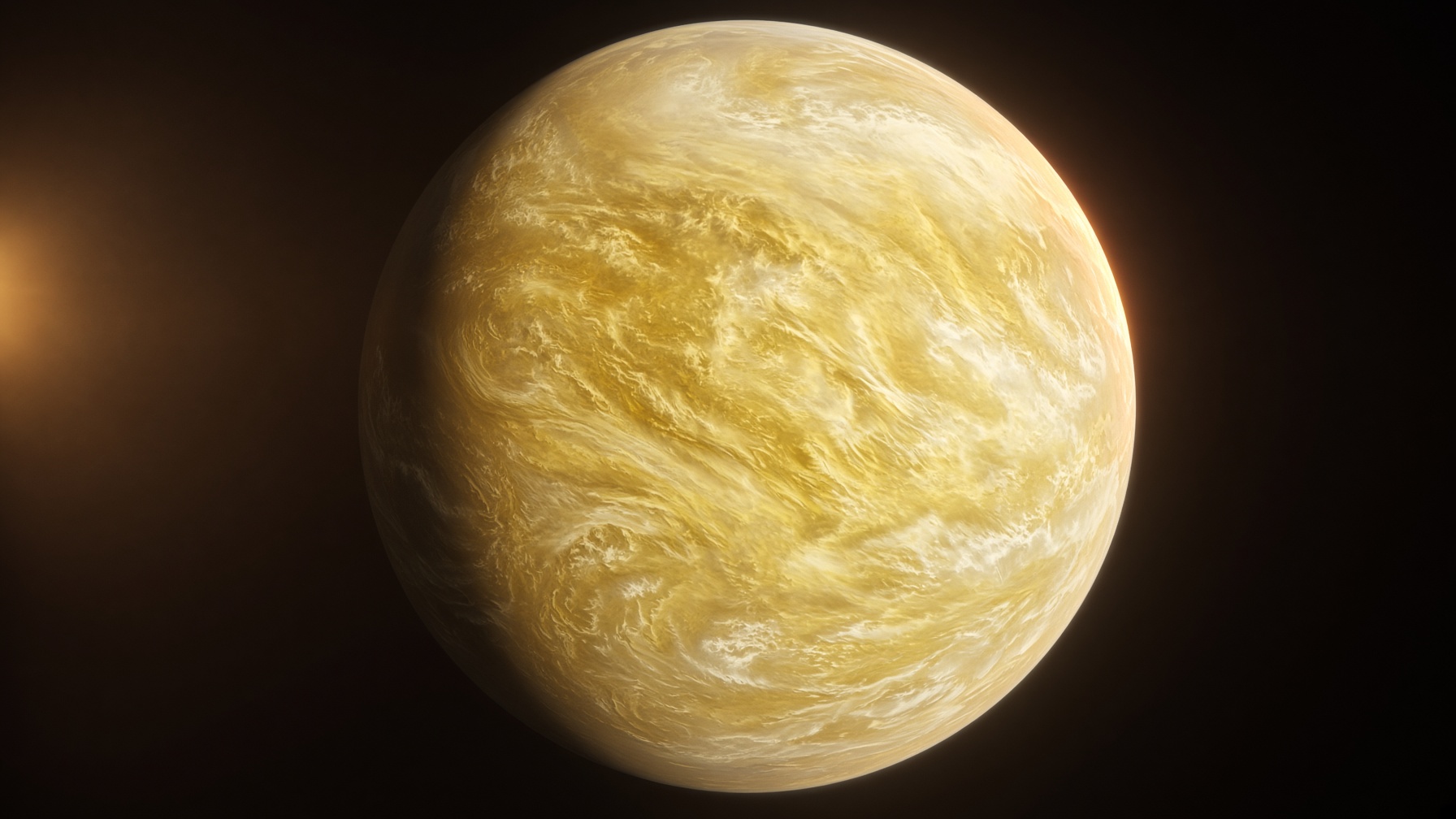
Open
Did Venus ever hold a long-lived ocean?
High D/H suggests substantial water loss. Tessera may preserve ancient crust. Whether the water was a sea, a mist, or a brief steam atmosphere remains a question for DAVINCI, VERITAS and EnVision.
Open
Is the surface still volcanic?
Magellan radar from February and October 1991 shows a Maat Mons vent that changed shape and doubled in size, consistent with eruption. Reported 2023 from the archive. Activity is inferred from old data, not watched live like Io.
Open
What is the unknown absorber?
Something in the upper cloud soaks up about half the incoming ultraviolet sunlight. It has not been identified. DAVINCI’s CUVIS is built to help name it. The mystery sits in the air, not only under it.
Alive
What does Venus teach rocky exoplanets?
Two similar masses, two climates. The inner edge of habitability is not a slogan. It is a trajectory. Venus is the nearby end-state we can still visit.
Dispute
Phosphine in the clouds?
Greaves et al. 2020 reported a PH₃ feature. Later observations and reanalyses disputed detection, abundance, and meaning. This office records a dispute, not a biosignature.
planned 29 March 2028
Venus Orbiter Mission
ISRO
Indian government approved September 2024. ISRO announced 29 March 2028 as the planned launch, 112 days to orbit. Planned, not sealed.
early 2030s
DAVINCI
NASA
Descent probe through the clouds, aimed at Alpha Regio tessera. CUVIS is built to help name the unknown absorber. Dates have moved; treat as early 2030s.
TBD, NET 2031
VERITAS
NASA / JPL
Global topography and composition. JPL lists launch TBD. NASA materials say no earlier than 2031. A question the next radar may answer.
planned November 2031
Envision
ESA
Subsurface radar. Venus as rock, air, and interior together. ESA factsheet: planned November 2031.
Inspect · Flown · 1962 to 2021
1962
Mariner 2
NASA
First successful planetary flyby. 14 December. Radiometers scanned for 42 minutes. Night as hot as day began as those minutes. A furnace, not a jungle.
1970
Venera 7
USSR
First landing on another planet. 23 minutes from the surface.
1974
Mariner 10
NASA
Gravity assist on the way to Mercury. 5 February occultation. X-band died at about 50 km. S-band reached about 42 km before the air extinguished it.
1975
Venera 9
USSR
First photographs from the surface of another world.
1982
Venera 13
USSR
Color panoramas. Survived 127 minutes in ~90 atmospheres.
1990 to 1994
Magellan
NASA
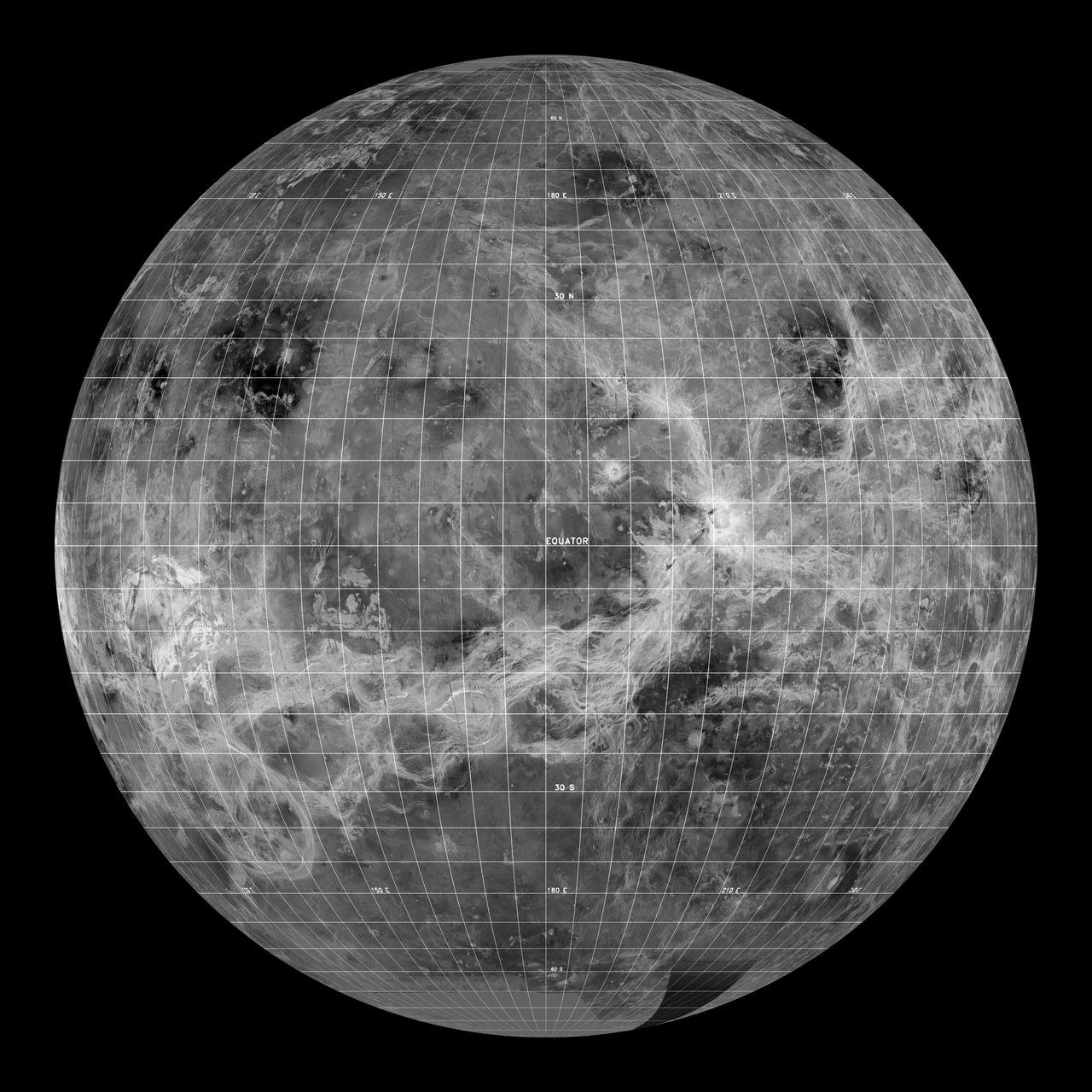
Synthetic-aperture radar of ~98% of the surface, still the atlas. First global map of ground and gravity.
2006 to 2014
Venus Express
ESA
Eight years in the air. Polar vortices that change shape. Nightside oxygen airglow. Cloud-top winds up to about 400 km/h.
2015 to 2024
Akatsuki
JAXA
Climate orbiter. Mapped the ~four-day superrotation of the clouds.
2020 to 2021
Parker Solar Probe
NASA
Gravity-assist flybys. WISPR recorded nightside surface glow and an oxygen halo. The ground writing itself in the dark.
Measured · three looks
Forty-two, as the instruments left it
Cipher counts letters. The Book keeps why 42 hovers. This house keeps three spacecraft facts. A duration. A radio death. A radar frame.
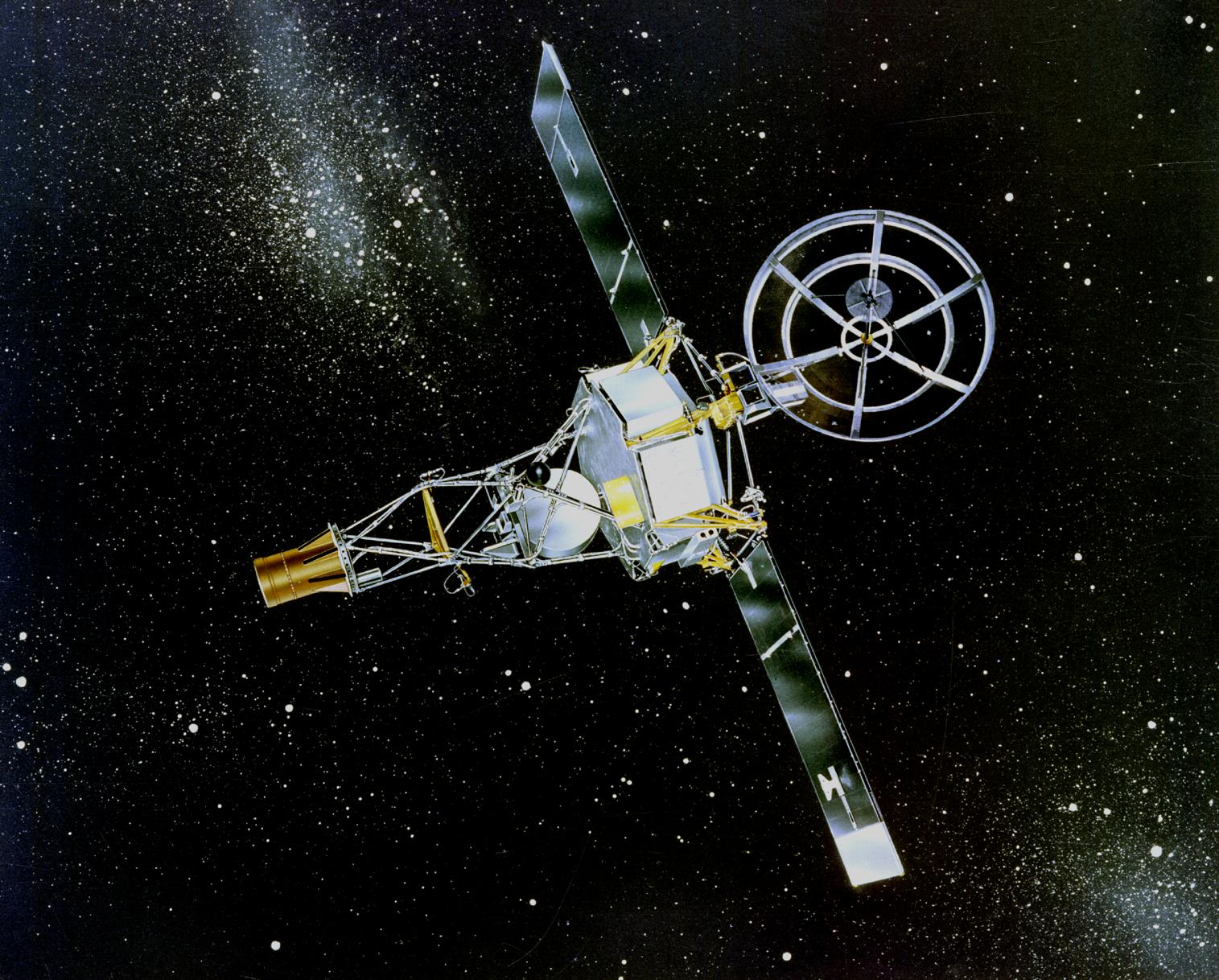
Artist’s concept. NASA / JPL. PIA04594. Mariner 2 carried no cameras. Not a photograph of Venus.
42 min
Mariner 2
14 December 1962
First successful planetary encounter. Microwave and infrared radiometers scanned the night side, the terminator, and the day side for forty-two minutes. Night as hot as day began as those minutes.
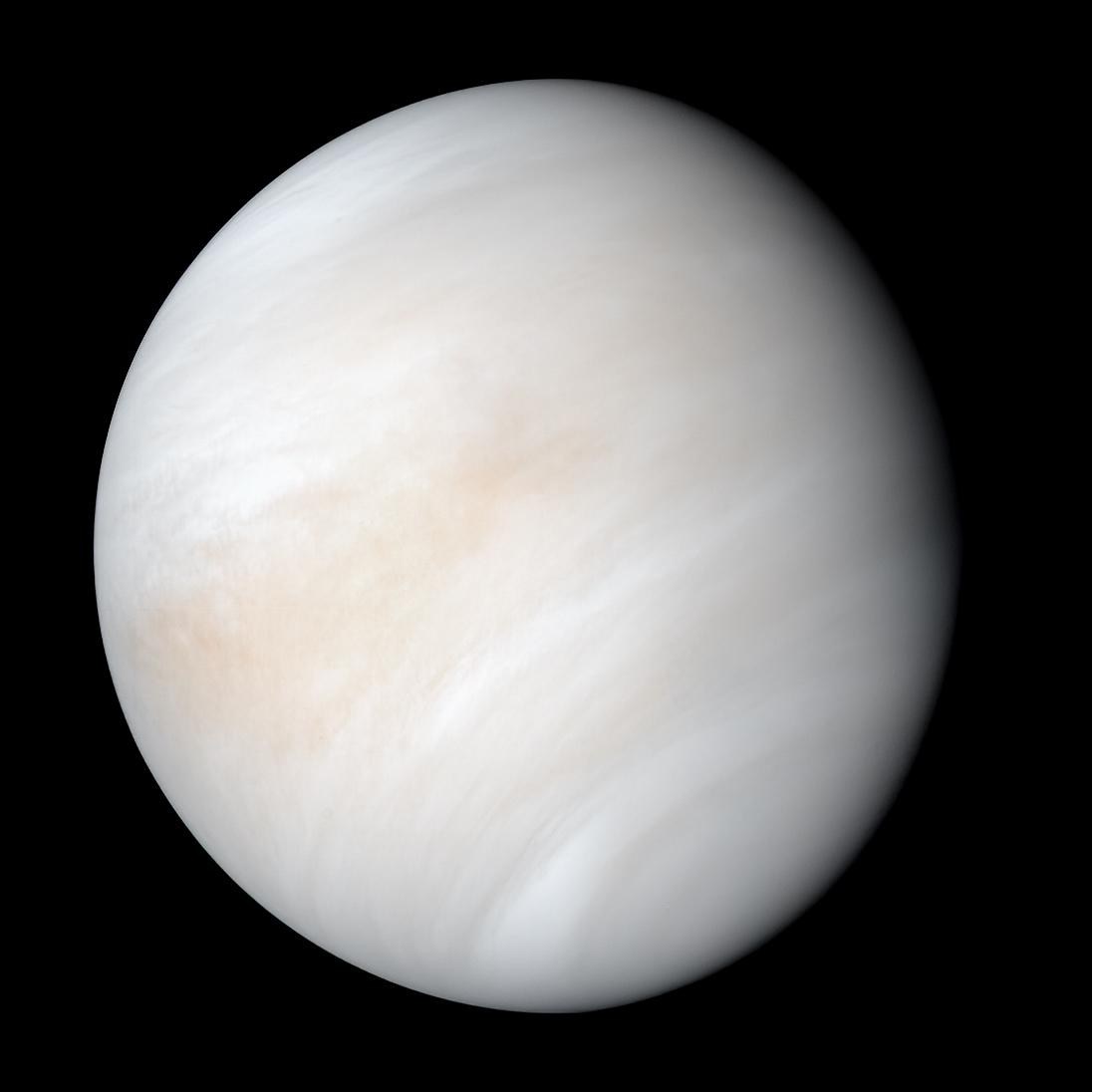
Mariner 10 · Venus. NASA / JPL-Caltech. PIA23791. Processed science of the lid. Not a photograph of the ground.
~42 km
Mariner 10
5 February 1974
On the way to Mercury the radio went through the air. X-band died at about 50 km. S-band reached about 42 km before atmospheric absorption extinguished it. The lid is not only optical.
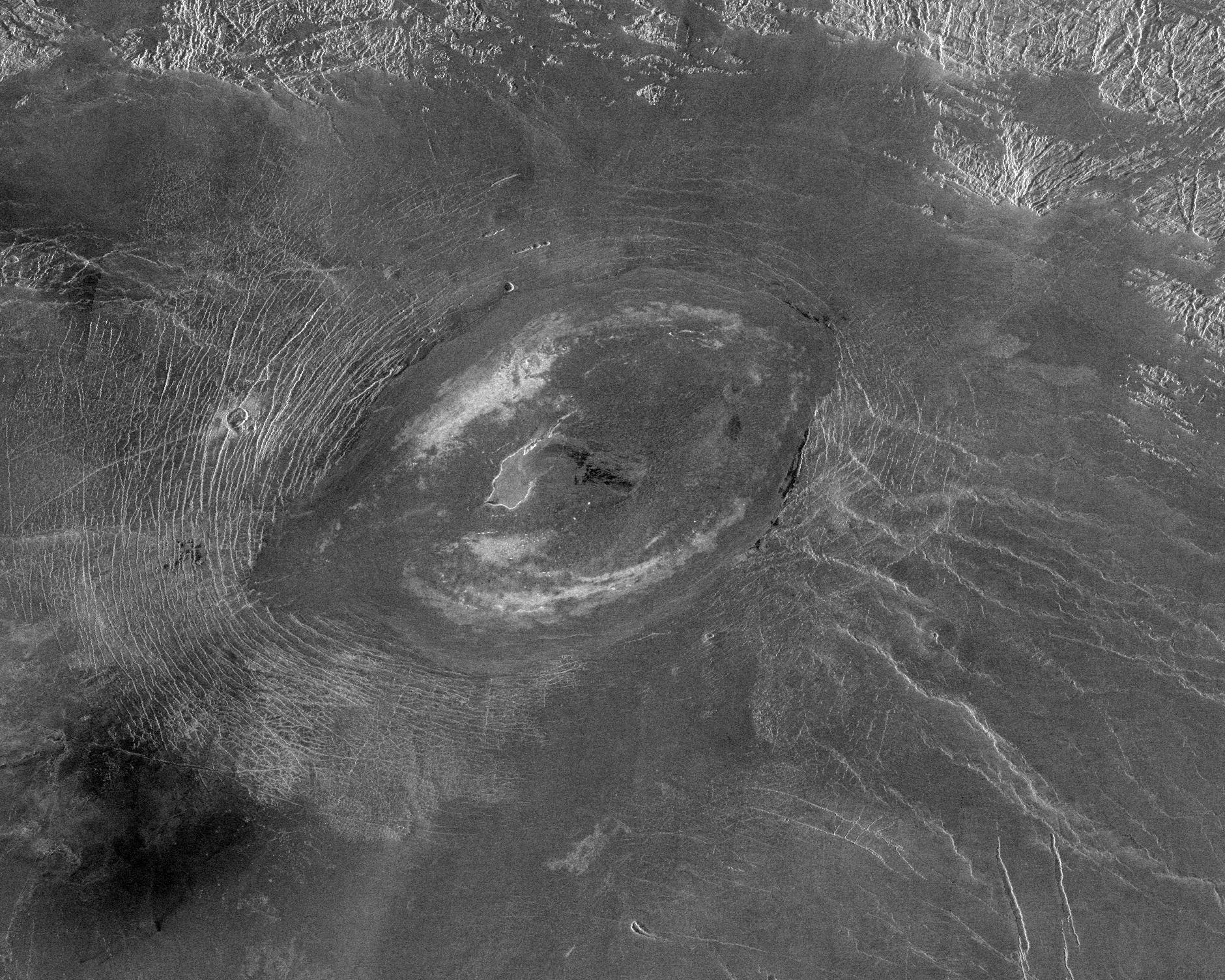
Sacajawea Patera. Magellan / NASA / JPL. PIA00485. Radar reconstruction. The plate is about 420 km wide at the base.
~420 km
Sacajawea Patera
Magellan · PIA00485
The published radar plate is about 420 km wide at the base. The caldera itself is a depression about 120 by 215 km on Lakshmi Planum. The 420 is the frame, not the mountain.
Cipher keeps the letter-count. This house keeps what the spacecraft did.
Inspect · Place beside
Names
They kept lookingThe Book
Why 42 keeps hovering around VenusCIPHER
The lab of the countWhat Makes a World?
What a world needs